

Port Tarragona advances in the decarbonisation of cruise activity with the first tenders for the OPS system.
Port Tarragona advances in the decarbonisation of cruise activity with the first tenders for the OPS system.
The Port Authority of Tarragona has launched a tender for the construction of two transformer substations, which will be located in the ZAL and at the Balears Wharf.
These two actions will represent an investment of €900,000.
The electrification of the Balears Wharf will involve an investment of nearly €22 million, co-financed by the CEF-T funds of the European Climate, Infrastructure and Environment Executive Agency.
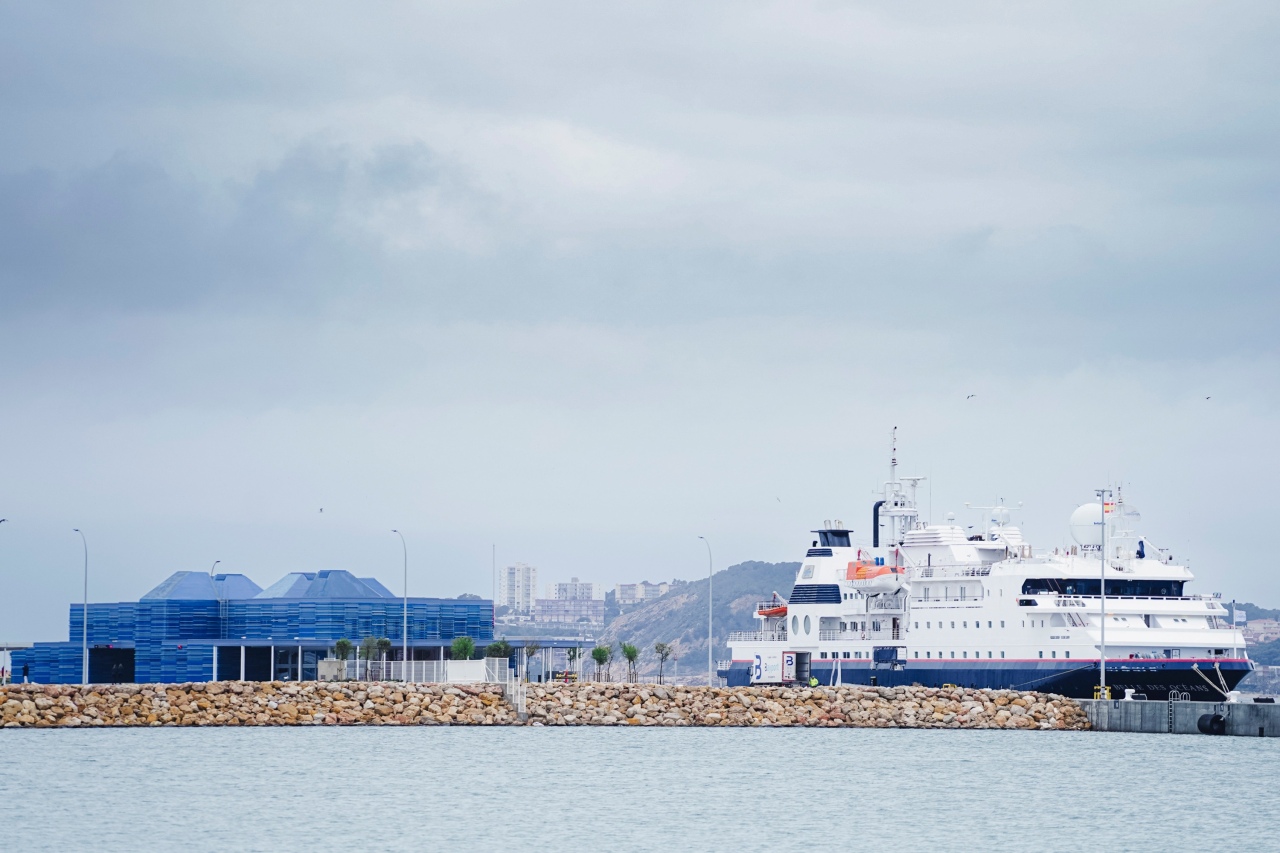
Port Tarragona has launched the first tenders linked to the Onshore Power Supply (OPS) system installation project to electrify the Balears Wharf and decarbonise cruise activity.
The Port Authority of Tarragona has opened tenders for the construction of two transformer substations, which will provide the necessary power supply for the OPS system to deliver electricity to vessels berthing at this wharf. The construction and installation of these transformer substations will involve an investment of €900,657.60 (excluding VAT).
These actions are co-financed by the CEF-T – Connecting Europe Facility for Transport programme. Last November, the European Climate, Infrastructure and Environment Executive Agency (CINEA) announced that Port Tarragona’s OPS project was among those selected to receive these funds.
The overall project represents an investment of €22 million, of which approximately €6.6 million (30%) will be funded by the European Union, while the remaining 70% will be financed by the Port Authority of Tarragona (APT) through its own resources and funding from the Official Credit Institute (ICO).
The first tender concerns the construction and installation of a new 1,000 kVA (kilovolt-ampere) medium-voltage electrical substation, which will be located on land near the Logistics Activities Zone (ZAL). This will be the main station of the system and will centralise the energy supplied from the general power grid. The project has a budget of €725,343.73 (excluding VAT). The deadline for submitting bids is 10 March, and the successful bidder will have five months to complete the works.
The second tender relates to a specific distribution and protection centre located at the Balears Wharf. This facility will receive energy from the main station and, through the underground network to be deployed throughout the port area, will protect the OPS system network, ensuring appropriate voltage levels and power quality for the safe connection of cruise vessels to the electrical grid. The construction of this centre has a budget of €175,313.80 (excluding VAT). The deadline for submitting bids also expires on 10 March, and the works must be completed within three months.
Six key actions
The OPS implementation project at Balears Wharf consists of six major actions. In addition to the construction of the two transformer substations currently out for tender, the project also includes the installation of a 3.1 km medium-voltage (25 kV) underground line from the power company substation, located outside the port area, to the new main transformer station; the creation of approximately 3.4 km of medium-voltage (25 kV) underground lines crossing several wharves; an 840-meter-long submarine connection allowing the electrical network to cross the breakwater between the Andalusia Wharf (inner area) and Catalunya Wharf (outer area); and the OPS system itself.
The planned system will allow the simultaneous connection of up to two cruise ships at Balears Wharf, one per berth line, thanks to the 10 MW of power available in the first phase. This means that either one medium-sized cruise ship (8 MW) or two smaller cruise ships (4 MW each) can be connected at the same time.
Reduction of emissions
Once operational, the OPS system will allow cruise ships berthed at Balears Wharf to connect to the onshore electrical grid during their stay at the Port, enabling them to shut down their auxiliary engines. This will drastically reduce greenhouse gas emissions, the presence of other air pollutants such as NOx, SOx, and particulate matter, as well as noise and vibrations in the Port’s social areas, such as Km0.
With its installation, Port Tarragona contributes to the European objectives for climate neutrality set out by the European Green Deal, the Fit for 55 programme, and various regulations on emissions reduction. In this regard, it is noteworthy that the OPS system at Balears Wharf will be fully operational before 2030, meaning that the Port Authority is ahead of the schedule established by the FuelEU Maritime regulation for the availability of these connections at European ports, thereby reinforcing its commitment to environmental sustainability.
CEF-T funds
The alignment of this project with European decarbonisation policies was one of the key factors considered by the European Climate, Infrastructure and Environment Executive Agency (CINEA) when awarding CEF-T funding. Specifically, the Port Authority will receive a grant of €6,594,600, corresponding to 30% of the total project cost.
It is worth highlighting that the project received a score of 22.5 points – the threshold for selection was 15 – thanks to its maturity and alignment with the priorities of the call, which prioritised OPS projects in seaports of the Trans-European Transport Network (TEN-T), of which Port Tarragona is a core port.
#EcoPort2030
The implementation of the OPS system at Balears Wharf is one of the focus areas of Port Tarragona’s decarbonisation strategy. This strategy, outlined in the #EcoPort2030 roadmap, aims to advance the port towards climate neutrality through actions in four main areas: electrification; renewable energies and alternative fuels; biodiversity and environmental protection; and awareness and knowledge.
This holistic approach, which takes into account operations, traffic, the natural environment, and the local community, enables interventions across all aspects of port activity to ensure that the decarbonisation of the Port becomes a tangible reality.
Tarragona, 13th of February 2026